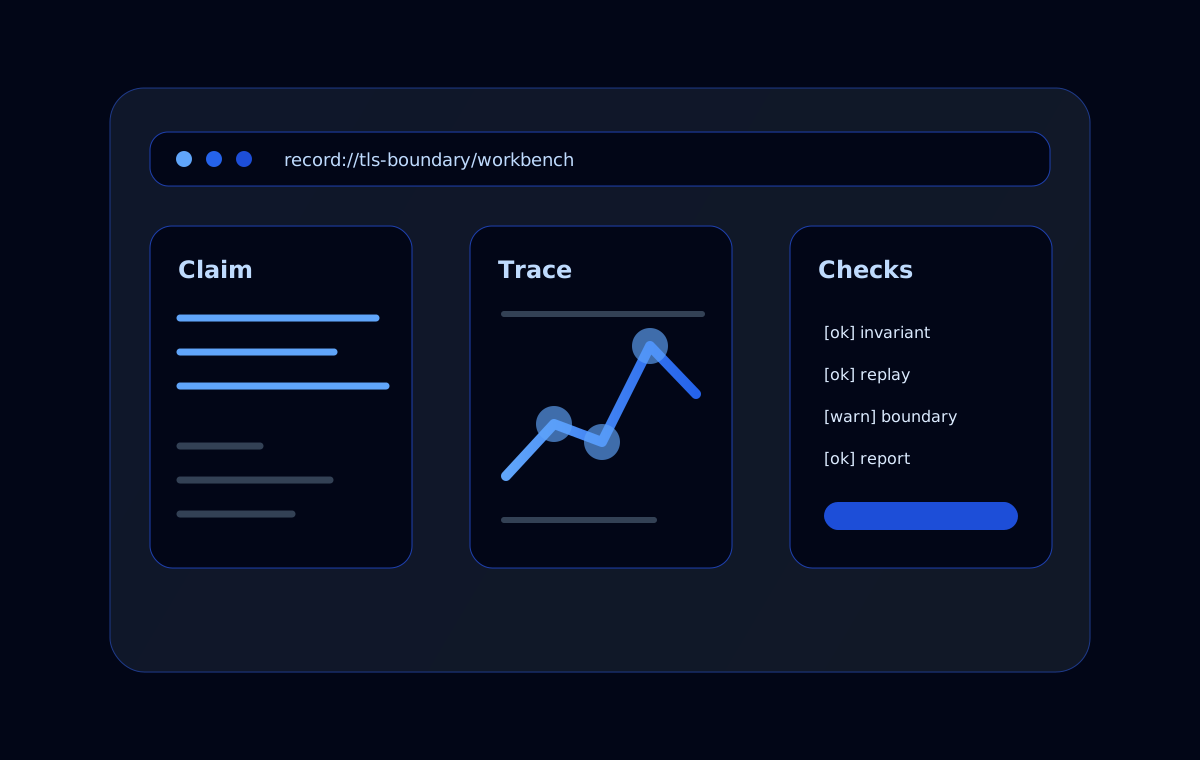
Question
What evidence does the page expose before the reader opens the repository?
This example treats the page as supporting material for a paper. Future research pages use this shape: claim first, evidence second, implementation third, scope visible throughout.
Record contract
| Section | Purpose | Reader question |
|---|---|---|
| Claim | State what the page supports | What is being asserted? |
| Workflow | Show the reproducible path | How would I rerun it? |
| Evidence | Summarize output and checks | What did it produce? |
| Limits | Bound the interpretation | Where can this fail? |
Minimal workflow
The command block is concrete by design. The template gives future projects an operational path for collection, normalization, and reporting.
pnpm run collect --target tls-boundary-slice
pnpm run normalize --input results/raw
pnpm run report --format static
export type EvidenceRow = {
target: string;
observation: string;
confidence: "low" | "medium" | "high";
materialUrl: string;
};
export function isReviewable(row: EvidenceRow) {
return row.confidence !== "low" && row.materialUrl.length > 0;
}Example evidence
Trace
128
normalized observations
Checks
14
review gates passed
Limits
3
explicit assumptions
Scope
- Repository links remain the source for implementation detail.
- Visual summaries carry uncertainty through explicit scope.
- Missing work appears as open questions and assumptions.
Template use
This prototype sets the shape for future technical pages. A real paper-linked record fills the skeleton with commands, outputs, links, and scope before it becomes part of the public research record.